BOILER SERVICE · MEDFORD, MASSACHUSETTS

Boiler Leak & Pressure Repair in Medford

Pressure changes and water leaks are closely connected in hydronic heating systems. Useful diagnosis follows the pressure pattern, identifies where water is leaving or entering the system, and checks the components that regulate expansion and fill pressure.

Medford coverage: 02155 & 02153. Connecting you with independent service providers.

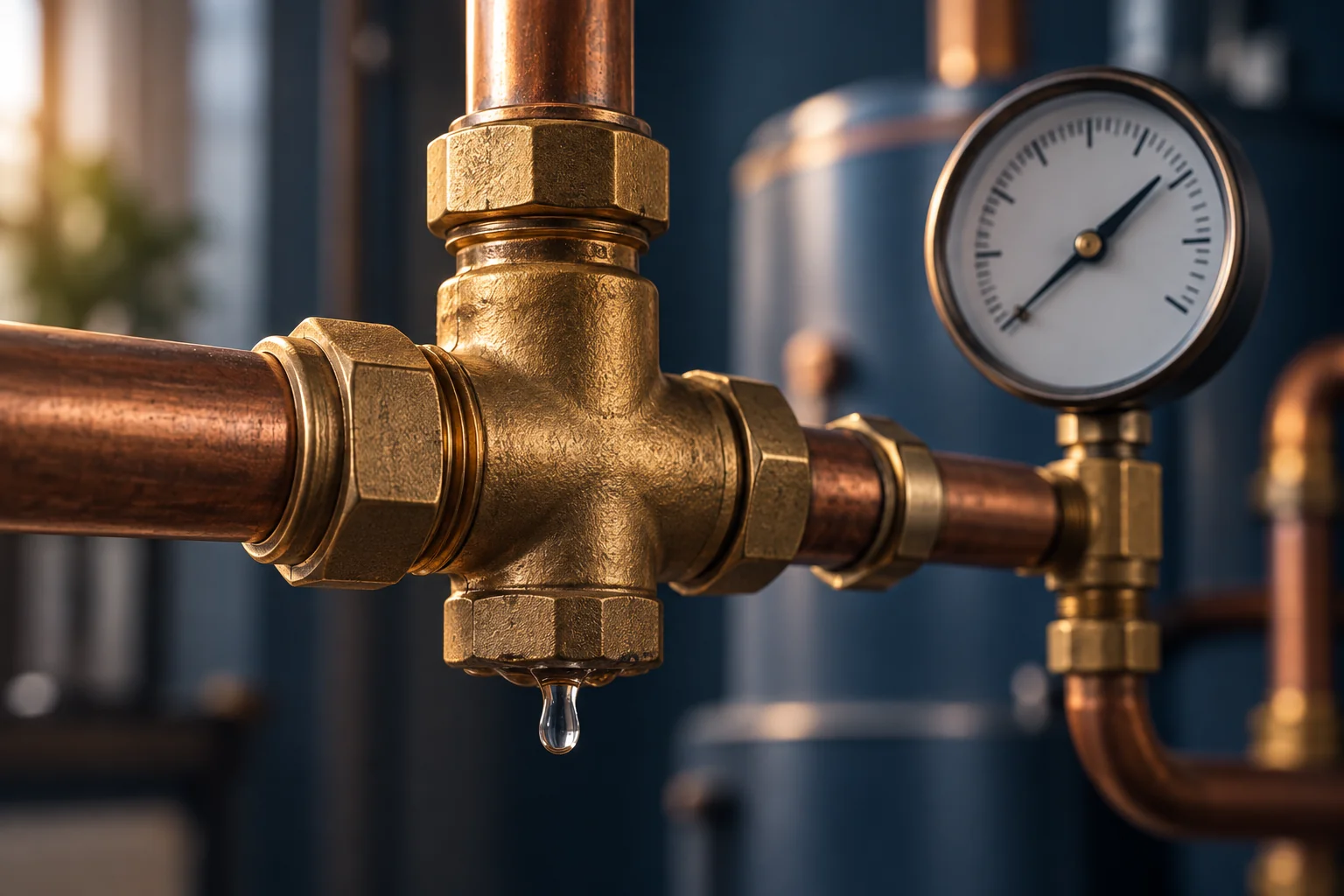
Illustration of a water droplet at a brass heating pipe junction beside a pressure gauge
Illustrative heating equipment · Not a completed local job

Service Overview

Boiler Leak & Pressure Repair in Medford

Pressure changes and water leaks are closely connected in hydronic heating systems. Useful diagnosis follows the pressure pattern, identifies where water is leaving or entering the system, and checks the components that regulate expansion and fill pressure.

How This Service Is Evaluated

A good leak diagnosis avoids replacing the first wet component without understanding why it failed. When pressure behavior is part of the problem, correcting the underlying expansion or fill issue can be just as important as repairing the point where water became visible.

How Service Requests Work

Boiler Repair Pro can help route a service request to an independent provider. The provider who accepts the request is responsible for diagnosis, recommendations, credentials, pricing, and any work performed.

Helpful Information to Share

Before service, keep a short symptom timeline. Record whether the issue appears during a call for space heat, domestic hot water demand, or both. If a pressure gauge is visible without opening the appliance, note the reading when cold and after a heating cycle. These observations can improve the first conversation with the service professional.

Symptoms and Causes

What the Problem Can Look Like

Pressure Keeps Dropping

A falling gauge can point to a visible leak, slow seepage, relief-valve discharge, an automatic air vent issue, or another loss path. The pattern matters: note whether pressure falls only when hot, only when cold, or continuously.

Pressure Rises Too High

Rapid pressure increase during a heat cycle may involve expansion-tank performance, fill-valve behavior, or another control issue. Discharge from a relief valve is a symptom that should not be ignored or capped.

Intermittent Water Around the Boiler

Water may travel along piping before dripping, so the wet spot is not always the origin. Pumps, flange gaskets, valves, fittings, vents, and boiler sections may require systematic inspection.

Safety first: Do not bypass a safety switch, block a relief valve, repeatedly reset a boiler that keeps locking out, or work on fuel or electrical components unless you are qualified to do so.

Diagnostic Approach

How a Qualified Professional May Narrow the Cause

The useful diagnostic path follows evidence rather than a generic parts list. The professional may compare the reported symptoms with what the boiler does during an actual call for heat, then test only the systems that are relevant to that sequence.

  • Where and when water appears
  • Cold and hot pressure readings
  • Expansion-tank and fill-valve considerations
  • Relief-valve discharge evidence
  • Circulation and temperature behavior
  • Findings, repair scope, and refill/bleed needs

Findings should be explained in plain language: what was observed, what component or condition is most likely responsible, whether operation is safe, and which repair or maintenance choices are reasonable.

Tools and Methods That May Be Relevant

  • System pressure testing
  • Visual and tactile leak tracing where safe
  • Temperature measurement across piping
  • Expansion-tank charge or condition checks as appropriate
  • Inspection of valves, fittings, pumps, and vents

Repair Decisions

Repair, Adjust, Maintain, or Investigate Further?

Repair a Confirmed Fault

When testing identifies a failed control, valve, pump, ignition component, leaking fitting, or another specific defect, the provider can explain the repair scope and any related system checks.

Correct the Contributing Condition

A component failure may be secondary to pressure, circulation, water quality, wiring, or control behavior. Addressing the contributor can reduce the chance of repeating the same symptom.

Plan Additional Work

Some systems need a model-specific part, a specialist, access coordination, or further diagnostic time. A responsible recommendation can be to stop and plan rather than improvise.

Useful Homeowner Observations Before the Visit

Understand the symptoms

Write down whether the thermostat is calling, whether other zones or fixtures work normally, whether the problem follows a particular time of day, and whether the boiler has been reset. If the system has an accessible display, preserve the exact wording or code instead of paraphrasing it.

Keep useful observations

Keep the boiler area accessible, but do not remove panels. Move stored items away only if it can be done safely.

Discuss the diagnosis

After diagnosis, ask what evidence supports the recommendation and whether any related condition should be monitored. A good explanation should distinguish the failed component from normal wear, maintenance opportunities, and optional improvements.

Plan access and timing

For recurring problems, a short record of pressure readings, fault codes, or affected zones can reveal patterns. That record is often more valuable than trying multiple resets or adjustments between visits.

Reading Leak and Pressure Patterns Together

Understand the symptoms

A hydronic boiler does not operate at one fixed pressure in every condition. Pressure normally changes as water heats and expands, but the amount and speed of that change should be consistent with the system design.

Keep useful observations

Expansion behavior is especially important when pressure climbs substantially during a heat cycle. A professional may evaluate whether the expansion tank can accept changing water volume and whether the automatic fill arrangement is introducing water when it should not.

Discuss the diagnosis

Leak tracing benefits from patience because water follows gravity, insulation, pipe surfaces, and structural materials. A wet floor below a pump does not prove the pump is leaking.

Plan access and timing

Pressure loss with no obvious puddle still deserves investigation. Small seepage can evaporate on warm components, discharge can occur through piping that terminates elsewhere, and some losses appear only under operating temperature.

Review the repair scope

Repair scope should match the evidence. Tightening or replacing a fitting can be appropriate when the fitting itself is the confirmed source, while recurring relief discharge may require attention to expansion or fill control.

Keep a follow-up record

After repair, the system may need refilling, purging, bleeding, or pressure stabilization according to its design. Ask what cold pressure was established, whether air was removed, and what normal gauge behavior should look like afterward.

What to Expect

A Service Request for Boiler Leak & Pressure Repair

  1. Where and When Water Appears

    Share what changed, when it started and the effect on heat or hot water.

  2. Cold and Hot Pressure Readings

    Provide accessible readings, fault messages and recent service history.

  3. Expansion-Tank and Fill-Valve Considerations

    The qualified provider decides which system-specific checks are needed.

  4. Relief-Valve Discharge Evidence

    Review the findings, proposed work and price before approving the repair.

  5. Circulation and Temperature Behavior

    Ask what was checked after repair and what to monitor afterward.

Need help choosing the next step?

Describe your symptoms and Medford location. An independent provider can confirm availability and discuss what happens next.

Discuss your service needs →

Questions before you arrange service

When should I request boiler leak & pressure repair?

Request professional evaluation when the symptom is recurring, stops heat or hot water, involves leaking water, or cannot be safely explained from normal homeowner observations. Gas odor, combustion concerns, carbon-monoxide alarms, or electrical burning smells require immediate safety action first.

What information helps with boiler leak & pressure repair?

Note when the symptom started, what the thermostat or boiler display shows, whether the problem is constant or intermittent, and any safe gauge readings or visible leakage. Do not remove covers or bypass controls to gather information.

Can the repair be diagnosed from a fault code alone?

Usually not. A code is a starting point, not proof that a specific part has failed. A professional may combine the code with sequence testing, pressure or temperature observations, and system-specific checks.

Does a leak mean I need a new boiler?

Not necessarily. The provider should identify the leak source, assess equipment condition and explain repair options before recommending replacement.

Should I keep adding water when pressure falls?

Repeated refilling can conceal the underlying loss. Ask the provider to investigate the pressure pattern rather than treating refilling as the repair.

What will the visit and repair cost?

Ask the accepting provider about diagnostic charges, parts, labor and any call-out fee. Review the proposed scope and price before authorizing work.

Can I book a same-day appointment?

Ask the accepting provider directly. Availability and arrival times depend on the scope and schedule; this site does not guarantee same-day service.

What warranty applies to a repair?

Ask the independent provider for written parts and labor warranty terms before approving work. This website does not guarantee work outcomes.